
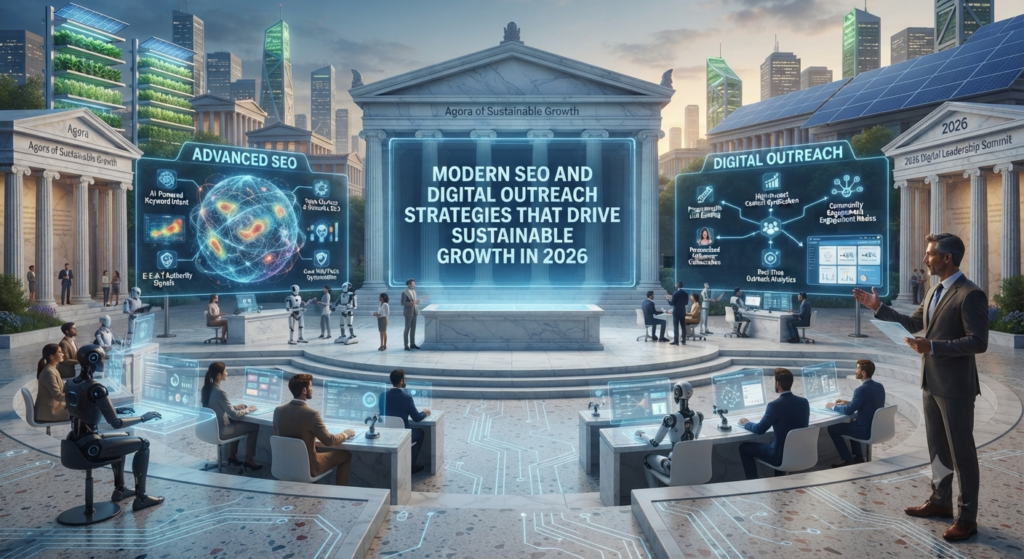
Digital growth in 2026 depends on more than publishing frequently. Successful websites combine useful content, technically sound pages, thoughtful outreach, and a clear understanding of how people discover information online. Search engines increasingly reward websites that demonstrate genuine expertise and satisfy visitors quickly, while readers expect every article to be practical, trustworthy, and easy to navigate.
Why a complete digital strategy matters
SEO is no longer a collection of isolated tricks. A strong strategy connects keyword research, content planning, on-page optimisation, public relations, and user experience. A website may have excellent articles, but those articles will struggle if pages load slowly, headings are unclear, or the site does not answer the searcher’s actual question. The most effective approach is to build a helpful content system in which every page supports a wider subject area.
Create content around real search intent
Before writing, identify what the reader wants to accomplish. Informational searches require clear explanations, while commercial searches need comparisons, examples, and transparent next steps. Content should answer the primary question early, then provide supporting detail for readers who need more depth. This structure helps users scan the page without making the article feel shallow.
On-page SEO remains important because it makes a page understandable to both visitors and search systems. Use one descriptive title, a logical heading hierarchy, concise paragraphs, meaningful image descriptions, and internal links that genuinely help the reader. For a practical review of core optimisation principles, see these proven on-page SEO techniques.
Use tools without losing editorial judgement
Browser extensions and SEO platforms can speed up research by revealing headings, metadata, broken links, and basic technical signals. They are useful for finding opportunities, but their recommendations should never replace human judgement. A tool can identify a missing description; it cannot decide whether an article is accurate, original, or genuinely useful. Bloggers can use free SEO Chrome extensions to make routine checks more efficient.
Make outreach personal and relevant
Outreach works best when it is based on relevance rather than volume. A short message should explain why the recipient may care, mention a specific piece of their work, and offer a clear collaboration idea. Generic emails sent to hundreds of websites often damage credibility. Personalised outreach takes longer, but it produces stronger relationships and more meaningful editorial mentions.
Writers and marketers can use a guest-post email generator for outreach as a starting point, then edit every message so that it reflects the recipient’s audience and publication standards. AI should support research and drafting, not create misleading claims or pretend that a relationship exists.
Understand changing media habits
People now consume news and specialist information across search results, newsletters, video platforms, social feeds, and mobile apps. That means publishers should not rely on one traffic source. A clear article can be repurposed into a short newsletter summary, a visual post, or a video outline while keeping the original page as the authoritative source. Understanding digital news consumption trends can help publishers choose the right formats without sacrificing depth.
Measure quality, not only traffic
Page views are useful, but they do not tell the whole story. Monitor engagement, returning visitors, conversions, scroll depth, and the queries that bring qualified readers. A page with fewer visits may be more valuable if it attracts people who subscribe, contact the business, or explore related resources. Review performance regularly and update content when facts, examples, or recommendations become outdated.
Conclusion
Sustainable digital growth comes from consistency and trust. Build content around genuine questions, apply sound on-page practices, use tools carefully, personalise outreach, and adapt to changing media habits. When these activities work together, a website can attract the right audience and turn casual visitors into loyal readers.