
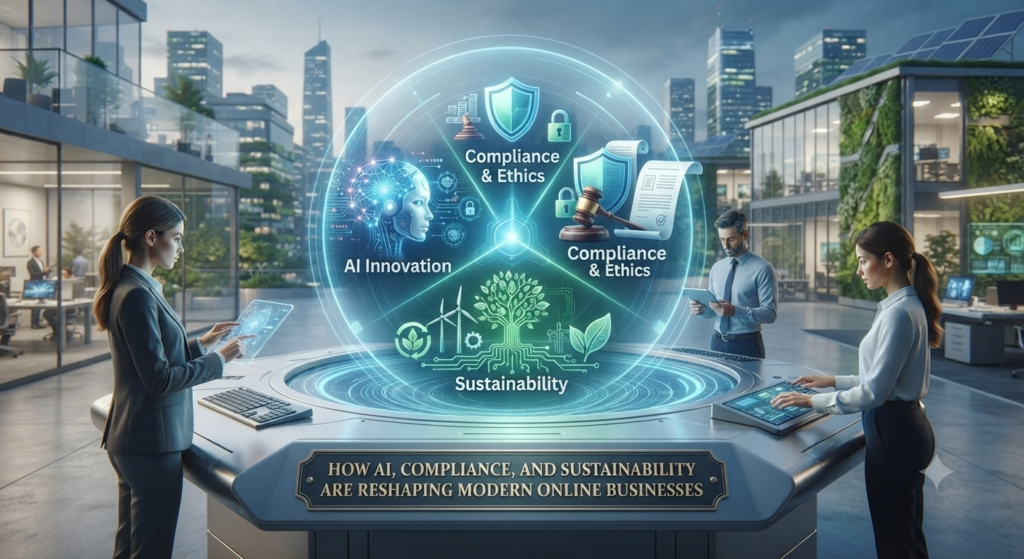
Modern online businesses are being shaped by three powerful forces: artificial intelligence, international work, and growing expectations around sustainability. These changes create new opportunities, but they also require better planning. Companies that adopt technology without considering privacy, employment rules, brand trust, or environmental impact may gain short-term speed while creating long-term risk.
AI is changing customer experiences
Artificial intelligence can help businesses analyse preferences, personalise recommendations, answer routine questions, and generate first drafts. In fashion and retail, AI is increasingly influencing how customers discover products, imagine different styles, and compare options. The discussion of AI, personal styling, and e-commerce fashion shows why retailers need to combine automation with human creativity.
Good implementation begins with a clear purpose. Businesses should define which decisions AI may support and which decisions require a person. They should also review generated content for accuracy, bias, tone, and intellectual-property concerns. Customers deserve to know when an automated system is influencing an important interaction.
Sustainability is now part of brand value
Consumers increasingly examine materials, supply chains, packaging, and product durability. Sustainable fashion is therefore not merely a marketing theme. It affects sourcing, manufacturing, resale, repair, and communication. Businesses exploring sustainable fashion trends in digital retail should support claims with evidence and avoid vague promises that cannot be verified.
A credible sustainability programme focuses on measurable improvements. Examples include reducing unnecessary packaging, choosing longer-lasting materials, publishing supplier standards, and making repair or reuse easier. Clear reporting builds more trust than dramatic slogans.
Remote work requires careful compliance
Hiring people across borders can help a growing business access valuable skills, but employment obligations differ between countries. Classification, payroll, tax, benefits, leave, data protection, and termination rules can all vary. A company should not assume that a contractor arrangement is appropriate simply because the work is performed online.
Before expanding internationally, create a written process for onboarding, payment, security, and record keeping. The cross-border employment compliance guidance for remote teams provides useful context for businesses reviewing these responsibilities. Professional legal advice may still be necessary for a specific country or employment arrangement.
Legal readiness protects small businesses
Legal compliance is not only a concern for large corporations. Small businesses also need practical systems for contracts, privacy notices, marketing permissions, intellectual property, consumer rights, and financial records. A business can reduce avoidable mistakes by assigning responsibility, documenting procedures, and reviewing policies at regular intervals.
Use an essential legal compliance checklist for small businesses as a planning tool. Checklists do not replace qualified advice, but they can reveal areas that deserve attention before a problem occurs.
Build a balanced operating model
The strongest businesses do not treat technology, compliance, and sustainability as separate departments. AI needs responsible data practices. International hiring needs secure systems and clear policies. Sustainability claims need accurate content and transparent evidence. Bringing these areas together creates a more resilient business model.
Conclusion
In 2026, online business growth is increasingly connected to trust. Use AI to improve service rather than remove accountability, treat sustainability as an operational commitment, and manage cross-border work with care. Businesses that combine innovation with responsible systems will be better prepared for customers, employees, and regulators.