
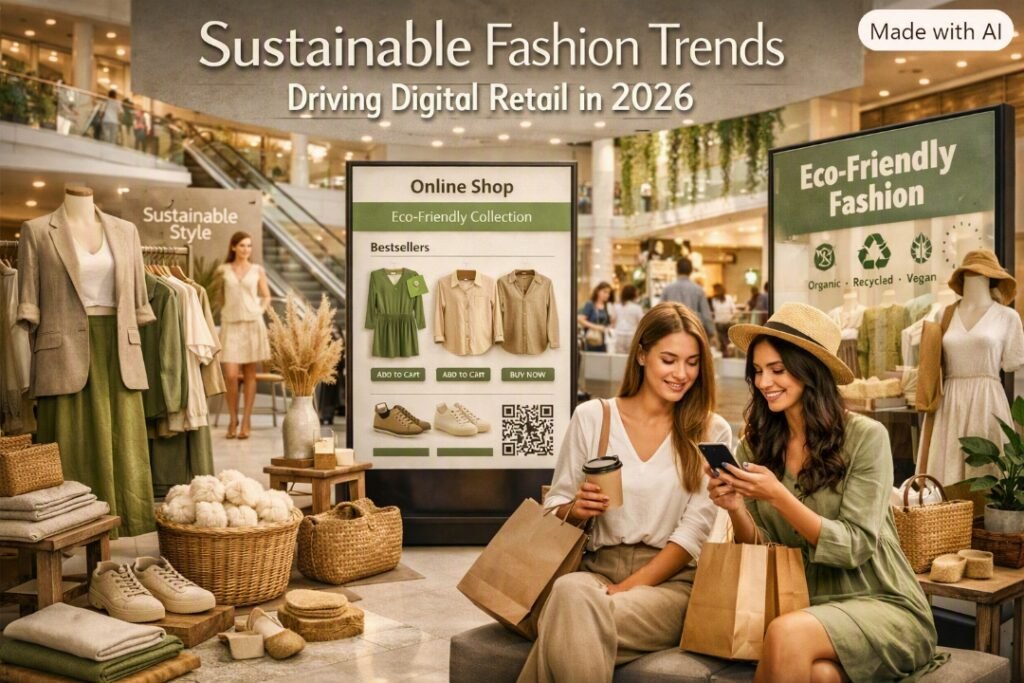
The global apparel industry is undergoing a major transformation driven by eco-conscious consumers, circular supply chains, and digital retail technologies. Understanding the sustainable fashion trends driving digital retail in 2026 enables fashion brands, e-commerce retailers, and shoppers to align with environmentally responsible clothing production while adopting modern digital shopping experiences.
Key Drivers Behind Sustainable Apparel Retail
Modern consumers and fashion houses are shifting toward eco-friendly practices across several core areas:
- Circular Garment Production: Designing clothing made to be recycled, repurposed, or biodegraded naturally.
- Digital Fitting & Virtual Styling: Utilizing online styling tools to reduce online returns and shipping emissions.
- Traceable Supply Chains: Providing QR-code transparency so shoppers can verify organic material origins.
- Low-Impact Textiles: Switching to organic cotton, hemp, and lab-grown bio-fabrics over synthetic polyester.
1. Upcycled and Bio-Based Textiles
Leading designers are increasingly adopting materials created from agricultural waste, recycled ocean plastics, and lab-grown bio-textiles. These materials match traditional luxury fabrics in quality while drastically reducing water consumption and chemical pollution.
2. Virtual Try-On and On-Demand Production
E-commerce brands are integrating digital try-on tools to help buyers evaluate garment fits before purchasing. Combined with on-demand manufacturing models, fashion houses produce only what is ordered, minimizing overstock waste.
3. Pre-Loved Fashion and Resale Platforms
Secondhand and peer-to-peer apparel resale marketplaces continue to grow rapidly. Digital platforms enable consumers to extend garment lifespans, turning fashion resale into a mainstream sustainable shopping habit.
Sustainable Fashion Trends Comparison
Here is a concise breakdown comparing modern sustainable fashion practices:
| Fashion Trend | Primary Focus | Environmental Benefit | Retail Adoption Rate |
|---|---|---|---|
| Bio-Based Fabrics | Textile Innovation | Zero Plastic Microfibers | Growing Rapidly |
| Virtual Try-On | Digital Retail Tech | Reduces Return Shipping Emissions | High Adoption |
| Apparel Resale | Circular Economy | Extends Garment Lifecycle | Mainstream Trend |
Frequently Asked Questions (FAQs)
Do sustainable garments cost significantly more than fast fashion?
While initial prices can be higher due to quality materials and fair labor practices, sustainable clothing offers greater long-term durability and lower cost-per-wear.
Where can I read more fashion, property, and legal guides?
You can check our home page or explore our full main blog page to read all our latest articles. For digital business tools and software guides, visit AppSolveHub.
Final Thoughts
Adopting sustainable fashion trends empowers consumers to build eco-friendly wardrobes while supporting responsible brands. As digital retail tools improve, eco-conscious shopping becomes easier, cleaner, and more accessible worldwide.