
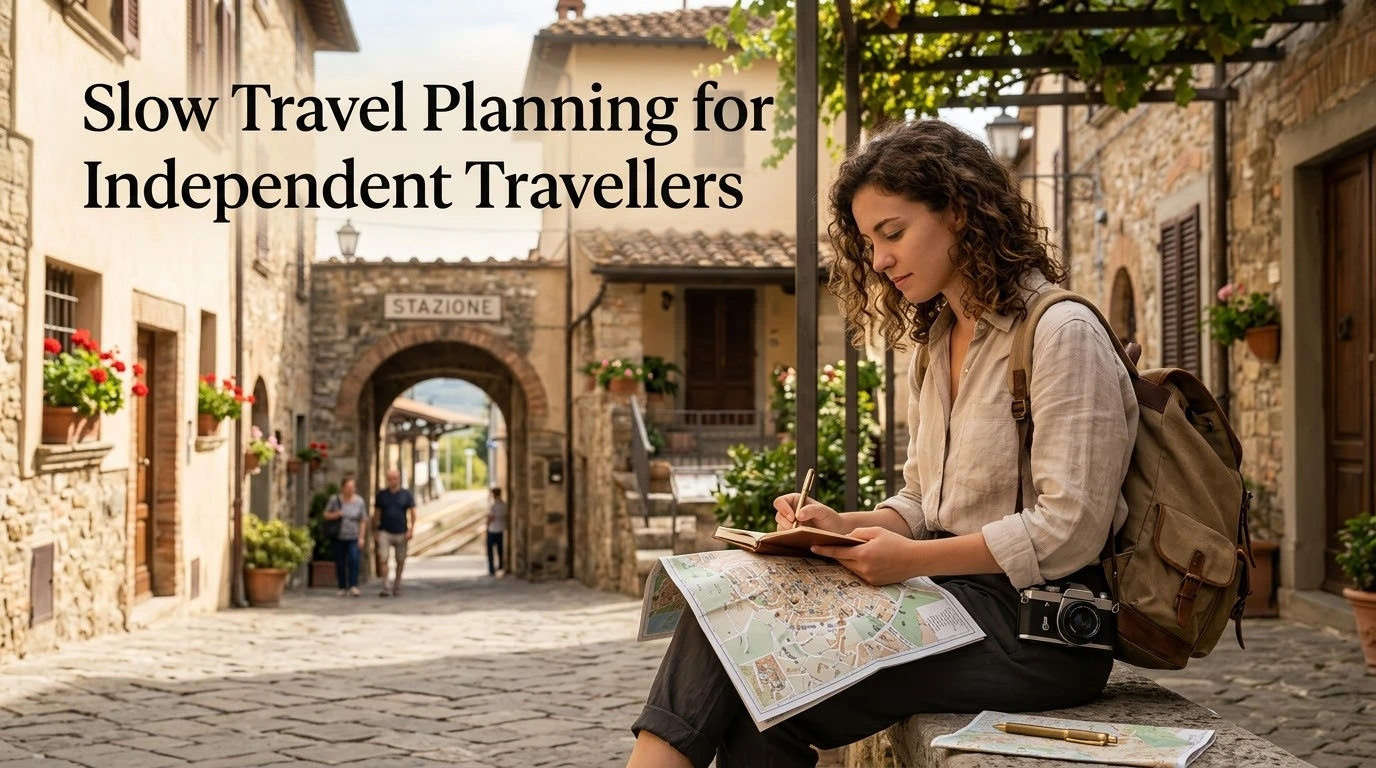
Slow travel is a practical way to experience a destination with less rushing and more attention. It does not require an unlimited budget or a long sabbatical; even a two- or three-day trip can benefit from a slower structure.
Choose fewer bases
Moving every night creates transport costs and reduces time for discovery. Select one main base and explore nearby areas by walking, public transport or a short local excursion.
Plan anchors, not every minute
Reserve essential transport and accommodation early, then leave space for markets, museums, neighbourhoods and weather changes. A flexible itinerary is usually less stressful than a packed list of attractions.
Spend locally and respectfully
Independent cafés, family-run shops, local guides and community-led experiences can provide more meaningful connections. Follow local customs, learn a few useful phrases and avoid treating residents or private homes as scenery.
Travel with practical awareness
Check current entry rules, transport information, insurance conditions and local safety guidance before departure. Keep digital and printed copies of essential documents, and avoid publishing sensitive details while away.
Make the trip your own
A slow itinerary might focus on architecture, food, photography, walking, history or nature. The best plan reflects your interests rather than copying a social-media checklist.
By choosing depth over quantity, independent travellers can return with stronger memories, better local understanding and fewer exhausting travel days.